History
Five centuries of history. A place for yours.
At the foot of the Salève, ten minutes from Geneva, a Savoyard fortified house whose walls have seen a royal notary, a founding geographer and a dynasty of painters.
You come in through a 16th-century tower. You leave with the feeling of having walked through the history of Geneva and Savoy. Today a new page opens: the events you choose to live here.
Discover the estate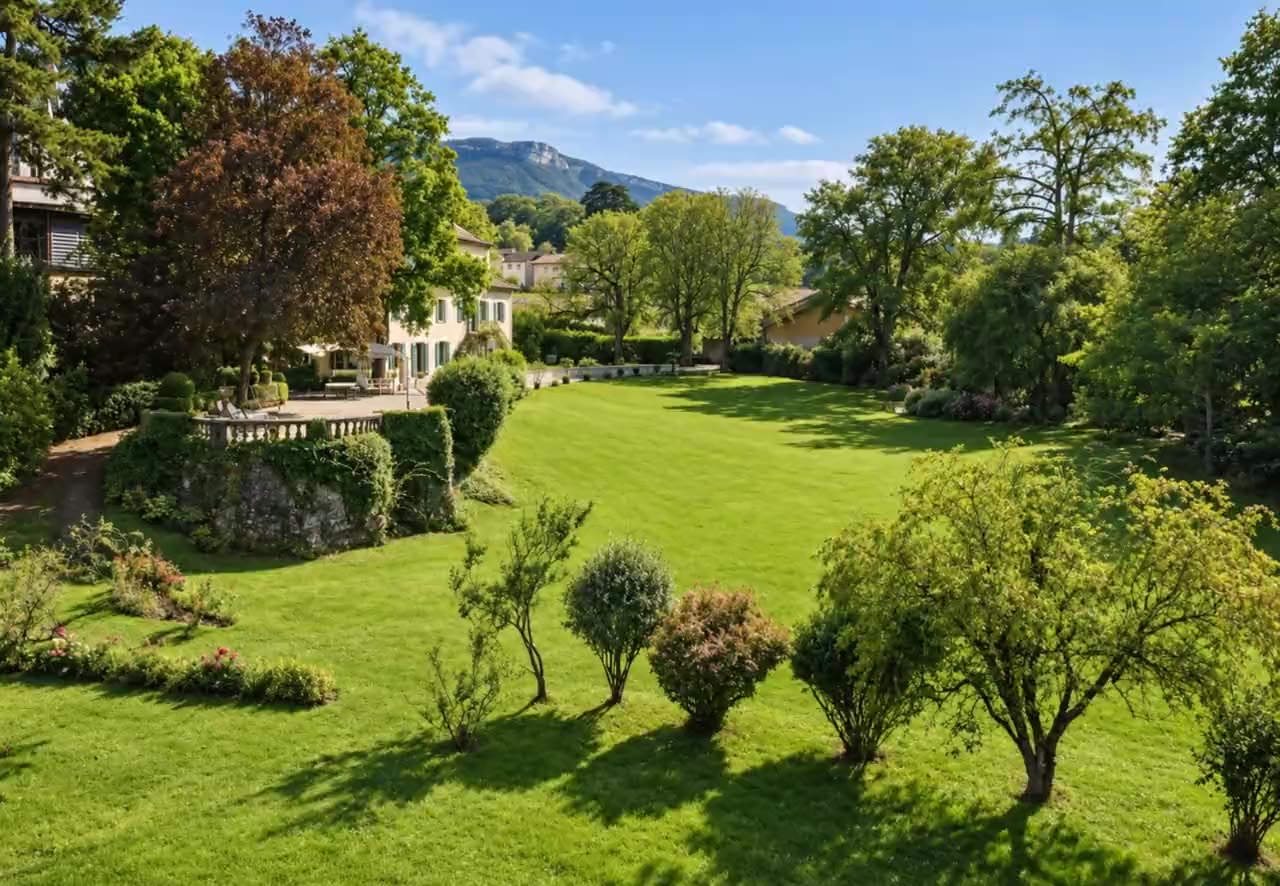
-
16th century The origins
A fortified house born in the Renaissance
The house goes back to the 16th century. It already appears on the Sardinian map of 1730, the great land survey ordered by the dukes of Savoy — one of the first in Europe.
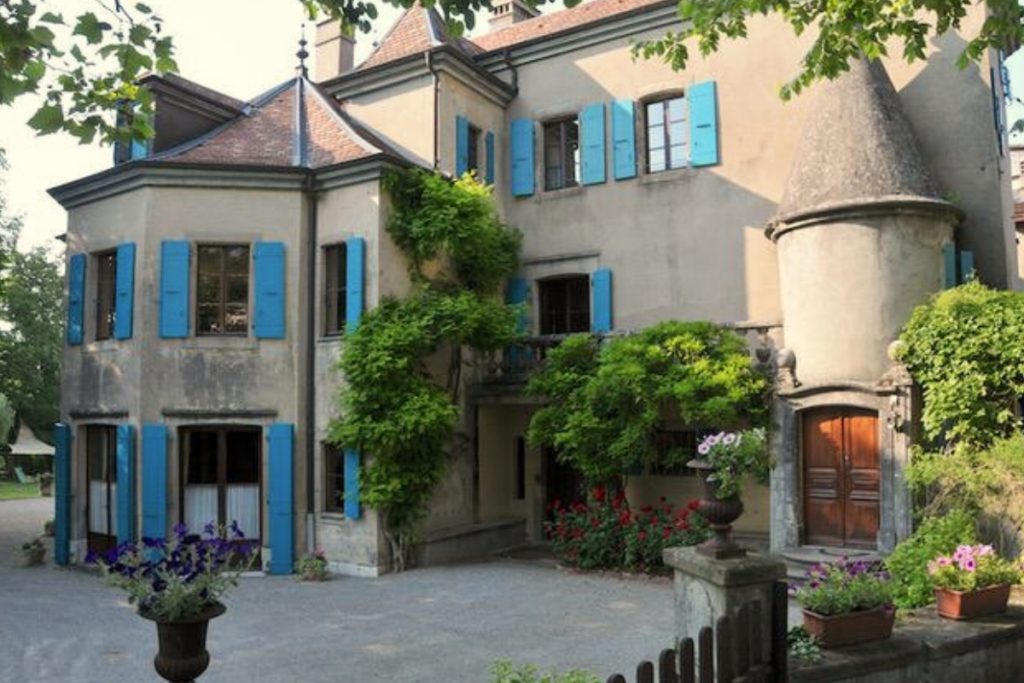
Its oldest heart survives from that time: the tower and its spiral staircase, for centuries the only way up. To climb those steps is to take the path of everyone who has lived here for almost five hundred years.
Collonges was then border country, contested between Geneva and Savoy. In 1754 the Treaty of Turin passed it to the kingdom of Sardinia. From that position grew what is now Greater Geneva, with the estate at its heart.
-
18th century The Berthollet years
The house of a lord of the manor
In the 18th century the house belonged to Claude Berthollet, royal notary and châtelain of Collonges. His family restored it, lived in it and made it their own.
The Louis XVI salon on the first floor dates from their time. Its stuccowork on the theme of music is the work of the Geneva sculptor Jean Jaquet, one of the great decorators of his day. Above the doors, a “B” still recalls the family who commissioned them.
Family tradition links this notary to the chemist Claude-Louis Berthollet, who joined Bonaparte on the Egyptian campaign. The Empire salon, furnished in the Egyptian revival style, still echoes it.
-
1856 The transformation
A house made for receiving
In 1856 Henri Bouthillier de Beaumont bought the fortified house. A surveyor and geographer, two years later he founded the Geneva Geographical Society. He married Blanche de Budé, of one of the oldest families of the Geneva patriciate.
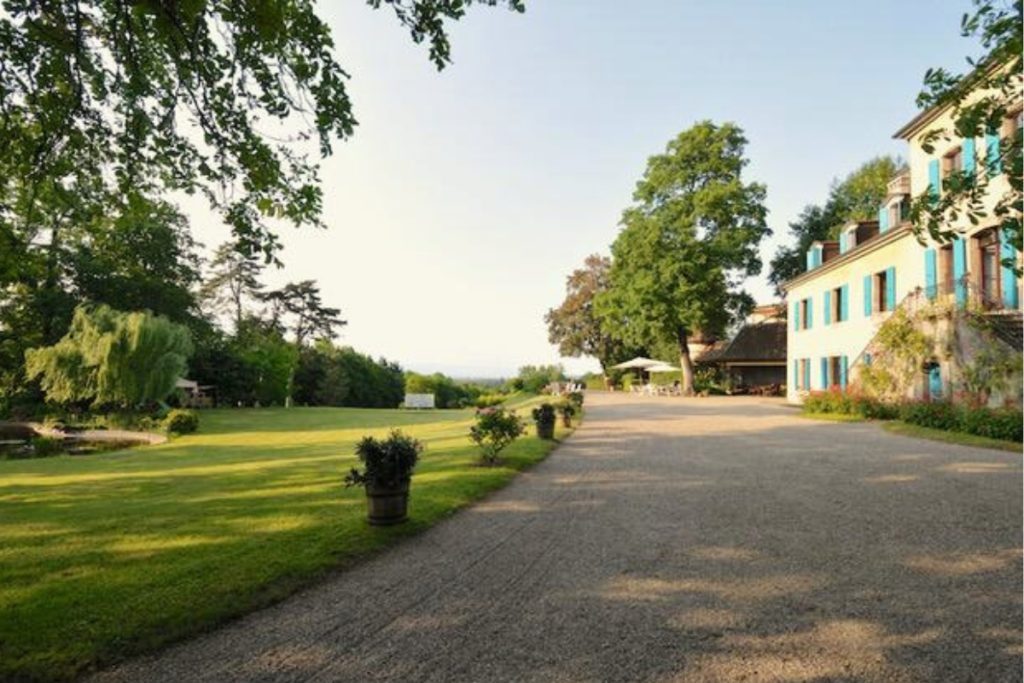
He transformed the house: two wings extended it, and a grand staircase now led to the first floor. A plan from 1871 shows a formal French garden in front of the façade.
The old fortified house became a house for receiving, open to the Salève and to Geneva.
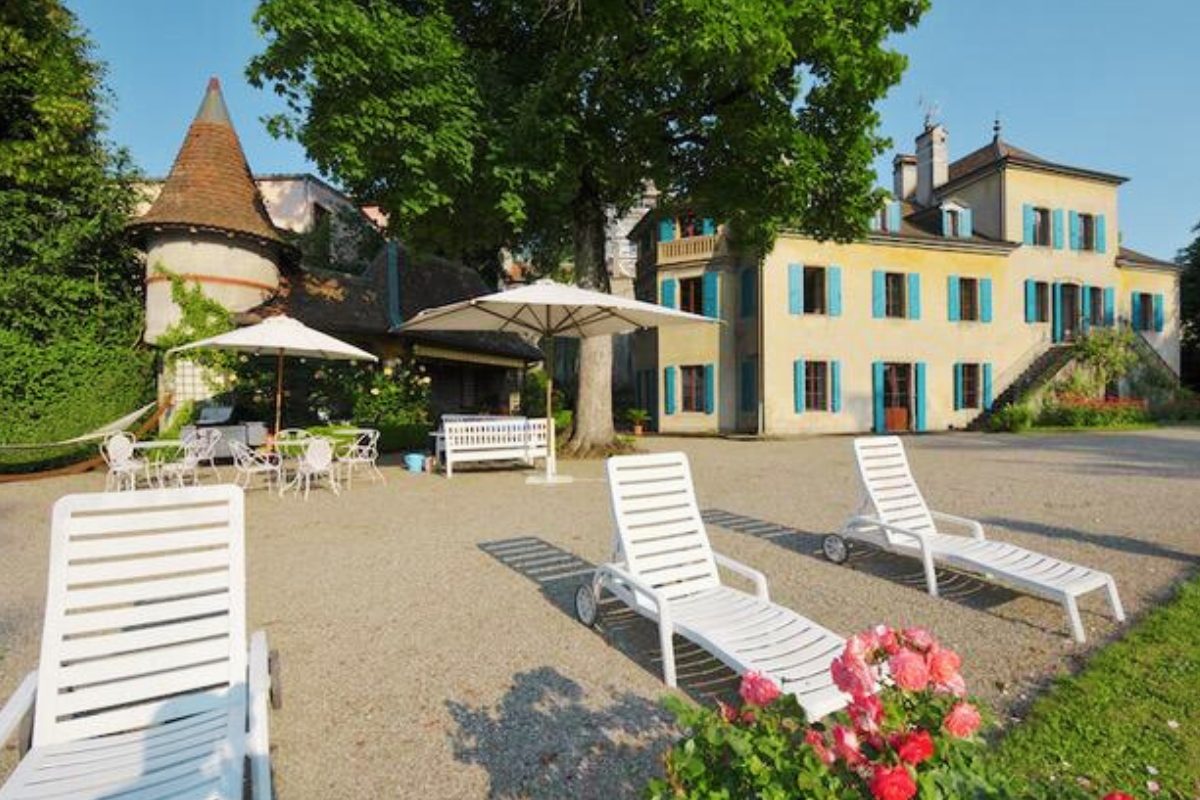
That variety of spaces is what gives Le Manoir its character today. It invites an event that unfolds in several acts, with its arrivals, its conversations and its moments of celebration.
-
19th century The painters
The house of a dynasty of artists
Gabriel de Beaumont left trade for painting and founded, without knowing it, a dynasty of artists. His family would paint the Salève, Lake Geneva and the birds of the mountain here at Collonges.
Pauline, trained at the Académie Julian, exhibited at the 1900 Paris World’s Fair. Gustave, a friend of Ferdinand Hodler, painted the frescoes of the Grand Théâtre de Genève — and, more intimately, the cherubs that still crown the doors of the pink salon.
Between 1935 and 1950 the etcher Maurice Achener stayed here regularly and engraved the house and its grounds.
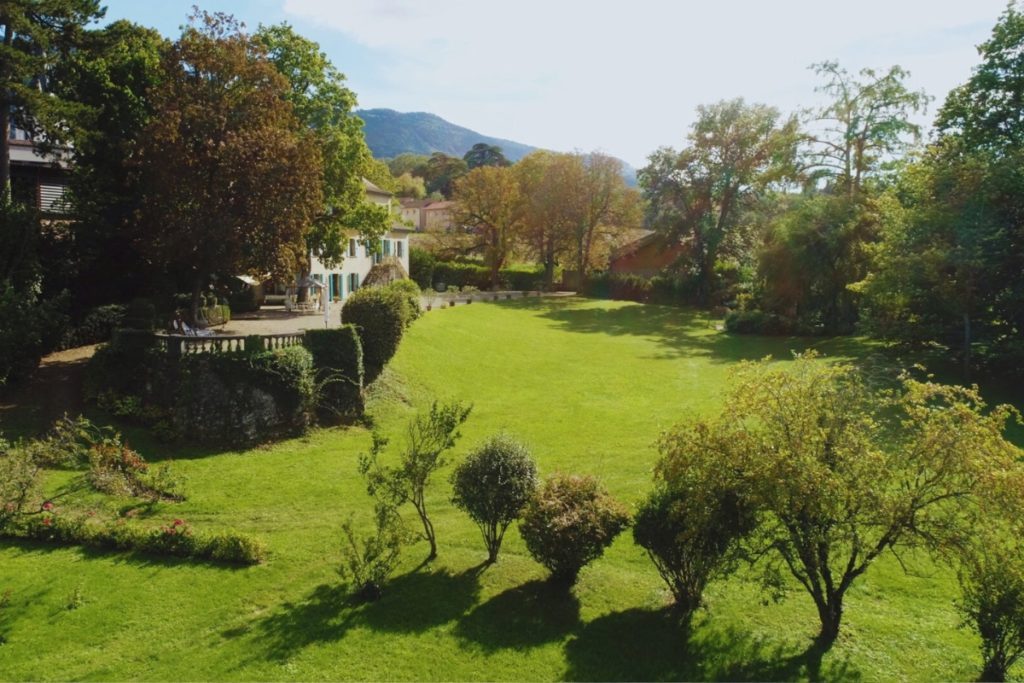
Since 1856, the house has never been sold
It has passed down within one family for almost a hundred and seventy years. Through the marriage of Hélène de Beaumont it came to the Patry family, who live here still.
In the salons, the portraits of Charles and Esther Patry face those of Henri and Blanche. Each generation has added its own layer of memory without erasing the ones before.
That is what gives the house its rare atmosphere: a place genuinely lived in, not a reconstructed set.
What your guests will see
A wedding, a private reception, a company gathering: every event moves through these rooms. Your guests do not walk into a function room, but into a house five centuries old.
-
The Empire salon
Furnished in the Egyptian revival style, echoing Berthollet’s journey with Bonaparte.
-
The pink salon
The cherubs painted by Gustave de Beaumont still crown the doorways.
-
The Gothic fireplace
Monumental, in the first-floor dining room. The historian Guillaume Fatio was already describing it in 1899.
-
The Louis XVI salon
Its musical stuccowork by Jean Jaquet opens onto a terrace and an outdoor staircase.
-
The tower
The 16th-century spiral staircase, which takes the visitor back to the first day of the house.
-
The grounds
A terrace looks down over the formal garden; the farm recalls the estate’s working past.
Come and see the house
A visit is the only way to feel the atmosphere of the estate, walk through its rooms and begin to picture your event.
Tell us about your plans. We will welcome you for a private visit and take the time to explore the possibilities with you.